Chicago in February is a living thing. It claws at your lungs. It bites through your gloves. The wind off Lake Michigan cuts like shattered glass, and even the smoke seems colder here—thicker, meaner.
But for me, the world has always come in just two colors: the ash-black of what’s left behind and the violent red of what’s still burning.
My name is Jax Moreno. I’m Captain of Fire Station 19 on the South Side of Chicago. Twelve years on the job. Hundreds of calls. Collapsed roofs. Backdrafts. Explosions that rattle your bones and leave your ears ringing for days. I’ve carried children out of infernos. I’ve held strangers as they took their last breath. I’ve looked Death in the eye so many times, we’re on a first-name basis.
But nothing—nothing—prepared me for the fire at the Lakeshore Crest Apartments.
That was the night I realized I wasn’t chasing flames.
I was being led.
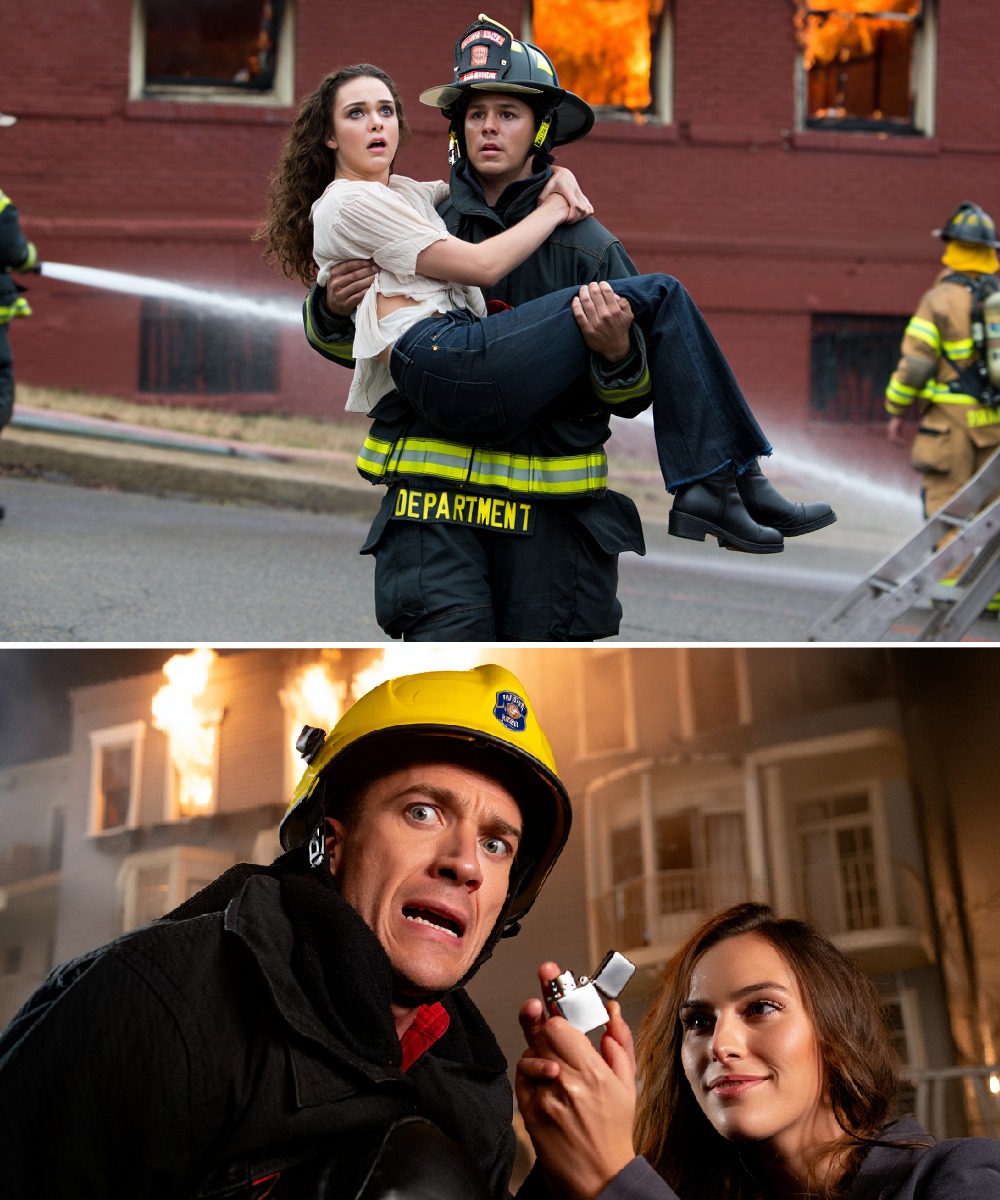
Part 1: A Cry from Hell
The call came in at 11:47 p.m.
“Multiple reports of fire, Lakeshore Crest, fifth floor. Possible entrapment.”
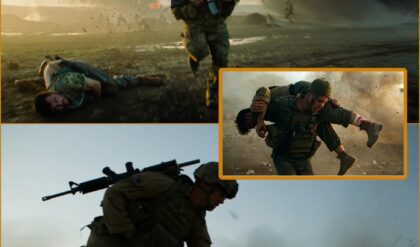
The sirens split the frozen air as Engine 19 tore down Lake Shore Drive. I could see the smoke from three blocks away—black and roiling against the winter sky. By the time we pulled up, flames were licking out of shattered windows like tongues searching for oxygen.
People were screaming. Some barefoot. Some wrapped in blankets. One man kept shouting, “She’s still up there! 502! She’s still up there!”
Dispatch crackled in my ear: “Confirmed. One soul trapped in Unit 502.”
One soul.
That’s how they say it when they don’t know the name yet.
I didn’t hesitate.
“Moreno going in,” I barked, pulling my mask tight. “Lopez, you’re on my six.”
The stairwell was a chimney of smoke. Visibility dropped to nothing halfway up. The heat intensified with each step—angry, unnatural, fast. Too fast for a building like this.
That should’ve been my first clue.
By the fifth floor, the hallway was a furnace. Flames crawled along the ceiling. Doors were blistering. The air was screaming.
“502!” Lopez shouted, pointing through the haze.
I kicked the door in.
Inside, it was chaos—furniture overturned, curtains fully engulfed. The fire was concentrated near the center of the living room, spreading outward in a near-perfect circle.
Another clue I missed.
Then I saw her.
A girl, maybe early twenties, collapsed near the window. Long dark hair fanned around her like spilled ink. She looked impossibly small against the collapsing beams.
I moved fast, scooping her up. She was lighter than I expected.
Too light.
Most victims panic. They cough. They thrash. They cling to you like drowning swimmers.
She didn’t move.
Her body was warm—but not overheated. Not blistered. Her breathing was steady.
“She’s not reacting!” Lopez yelled.
“Just move!” I shouted back.
The floor groaned beneath us. A warning crack split the air like a gunshot.
We bolted.
The hallway was an inferno now. I shielded her with my body as debris rained down. The heat clawed at my back. Something exploded behind us—glass, maybe. Or something worse.
We hit the stairwell just as part of the ceiling collapsed where we’d been standing seconds earlier.
By the time we burst out the main entrance, coughing smoke into the frigid night, the crowd erupted.
Cheers. Applause. Relief.
I laid her on the frozen grass. Ripped off my mask. Air never tasted so sharp.
Paramedics rushed in.
That’s when everything changed.
Part 2: The Shock Under the Strobe Lights
She stirred.
Her eyes opened slowly—crystal blue, almost luminous under the flashing red lights of the ambulance.
Clear.
Focused.
Too focused.
I knelt beside her as a medic checked her pulse.
“You’re safe,” I told her. “You’re going to be okay.”
She looked at me—not past me, not through me. At me.
Then I noticed her hand.
Clenched tight.
“Ma’am,” the medic said gently, “you’re holding something.”
Her fingers loosened.
A metallic glint caught the strobe light.
Small. Silver. Rectangular.
My stomach dropped.
It was a vintage Zippo lighter. Scratched. Worn. Engraved with an ornate letter “J.”
I felt like I’d been punched.
Three months ago, we’d responded to a warehouse fire in Bridgeport. My partner—Eddie Russo—went in with me. We got separated in a flashover. I made it out.
He didn’t.
Afterward, I realized my lighter was missing. Eddie used to joke that I carried it for luck.
I’d searched everywhere.
And now—
Now it was in her hand.
I instinctively checked my chest pocket.
Empty.
The medic reached for it. “We’ll hold onto—”
“No,” I snapped, grabbing his wrist harder than I meant to.
My eyes locked on hers.
“Where did you get that?”
For a split second, her face stayed blank.
Then something shifted.
The fear drained away like water down a sink.
And she smiled.
Not wide.
Not dramatic.
Just enough.
She flicked the Zippo open.
Click.
A small flame danced to life, absurdly bright against the night.
“You were two minutes too slow this time, Jax,” she said softly.
My blood turned to ice.
She knew my name.
“You should have seen how your friend died in the last one,” she continued, voice calm as snowfall. “He kept shouting your name.”
The world around me faded—the sirens, the crowd, the crackle of burning wood.
“Fire doesn’t kill people,” she whispered. “Delay does. Heroes hesitate.”
I stared at her.
“You locked him in,” I breathed.
Her smile widened.
Part 3: The Pattern in the Ashes
The police had been hunting a serial arsonist for months. Six fires. Always severe. Always fast-spreading. Always one “trapped victim” reported.
Each time, firefighters narrowly escaped death.
Each time, one responder got separated.
I never connected the dots.
Because the victim always survived.
Different names. Different apartments. Different hair colors.
But always the same eyes.
Blue.
She used herself as bait.
She would start the fire—carefully, strategically. Accelerants placed to create rapid spread but controlled pockets of survivable space. She’d position herself near an exit point. Appear unconscious.
Lure us in.
And if one of us hesitated—or got cut off?
That was her trophy.
Eddie wasn’t the first.
He was just the one that broke me.
“You’re under arrest,” I said hoarsely, though I had no authority to say it.
She laughed softly.
“You think this was about killing me?” she asked. “No, Jax. This was about watching you choose.”
“Choose what?”
She tilted her head toward the building.
The fifth floor windows exploded outward.
A new wave of screams erupted.
“Secondary ignition,” someone yelled.
My radio crackled: “Captain, we’ve got reports of a maintenance worker unaccounted for on the fourth floor!”
My heart slammed against my ribs.
She’d done it again.
Created a moral trap.
Stay with her—the monster responsible for Eddie’s death.
Or go back in.
She leaned closer, still lying on the stretcher.
“Go on,” she whispered. “Be the hero.”
Part 4: Breaking the Game
For a split second, I wanted to grab her.
To shake her.
To end it.
But that’s what she wanted.
Firefighters live by one rule: We go in when others run out.
I stood.
“Cuff her,” I told the nearest officer, my voice steady despite the storm inside me. “Do not let her out of your sight.”
Her smile faltered—for the first time.
I pulled my mask back on.
And ran toward the flames.
The fourth floor was worse than before. The secondary ignition had triggered a flashover corridor—flames racing along the ceiling in a deadly wave.
We found the maintenance worker trapped behind a jammed door. Conscious. Terrified.
It took everything we had to breach it and drag him out before the stairwell ignited.
When we finally emerged again, dragging him between us, the night exploded in cheers once more.
But I didn’t look at the crowd.
I looked at her.
She was sitting upright in the back of a squad car now, hands cuffed.
Her eyes met mine.
And for the first time—
There was no smile.
Epilogue: Ashes Don’t Lie
They found evidence in her apartment. Blueprints. News clippings. Photos of fire scenes.
Photos of us.
Of me.
Eddie’s lighter had been taken from the warehouse that night. She’d gone back into the wreckage after the investigators left.
A souvenir.
In court, they called her a pyromaniac. A narcissist. A predator.
But I call her something else.
A reminder.
Fire is honest.
It consumes what it touches.
It doesn’t pretend.
People do.
Chicago is still cold in February. The wind still cuts. The smoke still blinds.
But now, when Dispatch says “One soul trapped,” I remember her smile.
And I remember this:
Heroes don’t hesitate.
And monsters don’t always burn.