Morning arrived quietly, as if it knew better than to announce itself on a day like this.
A thin layer of fog clung to the dirt road in front of the small wooden house, wrapping the place in a hush that felt almost sacred. The American flag hanging beside the porch stirred slightly in the early breeze, its faded colors catching the first pale light of dawn. Inside the house, time seemed to move slower, stretching each second as if reluctant to let it pass.
Daniel Harper stood just inside the doorway, boots laced, uniform pressed with care, helmet tucked under his arm. The mirror by the wall reflected a man who looked older than his twenty-six years. War had not yet touched him, but it had already claimed something—his sleep, his appetite, and the easy smile that once came without effort.
Behind him, the house breathed with memories.
The soft creak of the floorboards reminded him of childhood mornings, when he would race barefoot to the kitchen, chasing the smell of coffee and his mother’s laughter. The walls still held faint pencil marks from when his father measured his height every birthday. Even now, Daniel could almost hear his younger self asking how tall he’d be when he grew up.
“You don’t have to be brave all the time,” his mother, Evelyn, said softly from the kitchen doorway.
She had been awake all night. Daniel could see it in her eyes—red-rimmed, swollen, holding back tears she refused to let fall. She wore the same cardigan she’d worn every morning since his enlistment, as if it were armor against the inevitable.
“I know,” Daniel replied. His voice was steady, but it didn’t feel like it belonged to him.
His father, Thomas, stood near the table, hands wrapped tightly around a chipped mug of coffee he hadn’t touched. A man of few words, Thomas had taught Daniel how to fix engines, how to throw a proper punch, how to keep his promises. But no lesson had prepared either of them for this moment.
Outside, the low rumble of a military truck broke the stillness.
Daniel’s younger sister, Lily, appeared at the top of the stairs. She was sixteen, too young to fully understand war but old enough to feel its weight. Her hair was pulled into a messy ponytail, and she clutched Daniel’s old high school hoodie against her chest.
“Do you have to go now?” she asked, though she already knew the answer.
Daniel swallowed hard. “Yeah. They don’t wait.”
He set his helmet down and crossed the room in three long steps, pulling Lily into a tight embrace. She buried her face into his uniform, breathing him in as if memorizing the scent of home.
“Come back,” she whispered.
“I will,” he said, the lie settling heavily between them.
When he turned to his parents, the room felt impossibly small. Evelyn reached up and adjusted his collar, her hands trembling.
“I packed extra socks,” she said, her voice breaking. “And the photos. And—”
“I know, Mom.” Daniel smiled, gently this time. “You always think of everything.”
She pressed her forehead against his chest, and for a moment, neither of them moved. Thomas cleared his throat and stepped forward, placing a firm hand on Daniel’s shoulder.
“Do your job,” he said. “And come home.”
Daniel nodded. That was all either of them could manage.
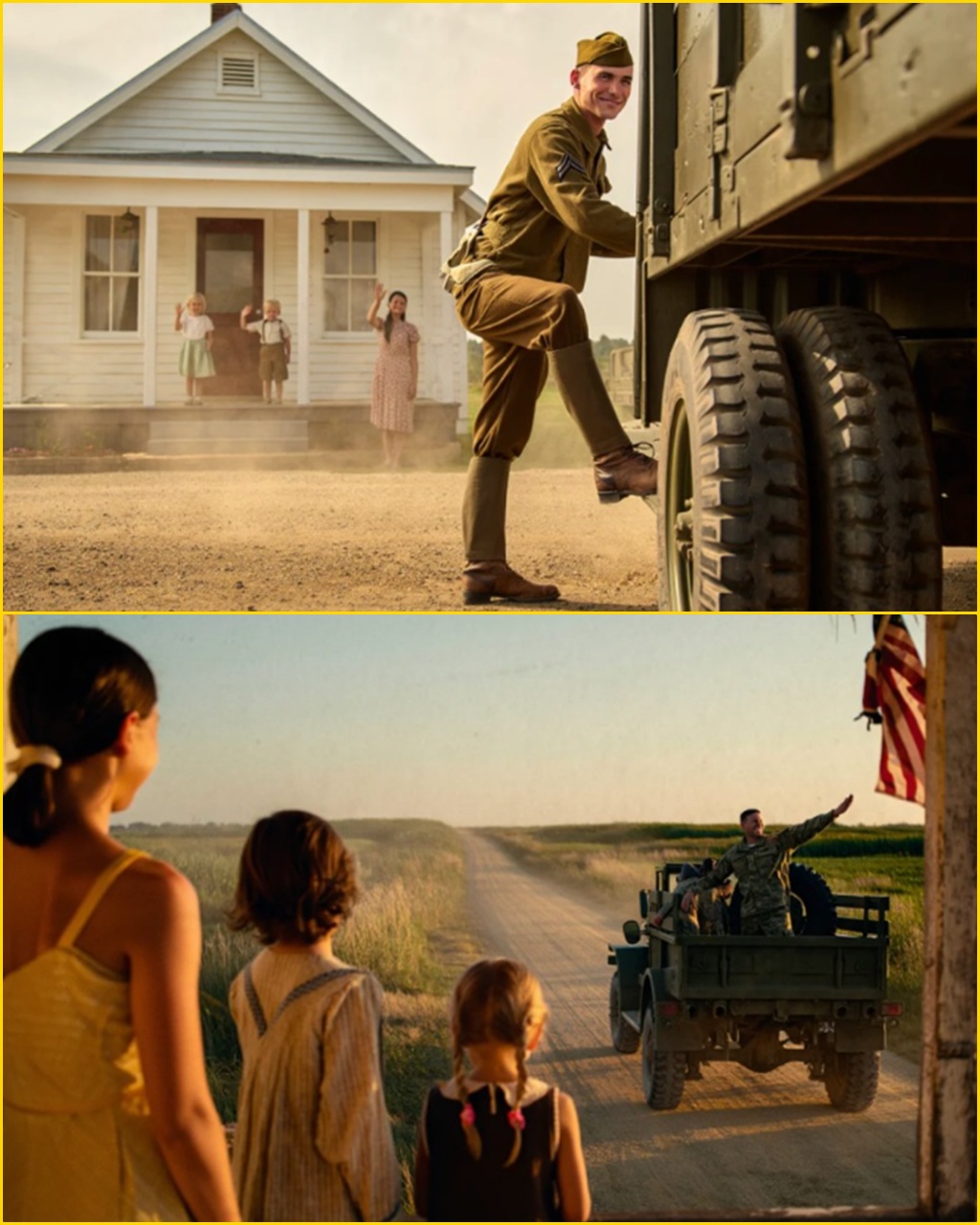
Outside, the fog had begun to lift. The truck idled at the end of the driveway, its engine impatient, indifferent. Two other soldiers sat in the back, already facing forward, already halfway gone.
Daniel took one last look at the house.
The porch where he had kissed his first girlfriend. The steps where he’d sat after his first real failure. The window where his mother always waited when he came home late. He hadn’t realized until that moment how small it was—or how much of himself lived inside it.
He raised a hand in a half-wave, half-salute.
Evelyn waved back. Lily clutched the hoodie tighter. Thomas stood tall, unmoving.
Daniel stepped onto the truck.
As it pulled away, he turned and smiled.
It was quick. Unforced. Almost boyish.
No one knew it would be the last time his family would ever see him smile.
The desert was nothing like the pictures.
It wasn’t endless dunes and dramatic sunsets. It was dust and heat and noise. It was the constant hum of tension, the kind that never let your shoulders relax. Days blurred together, measured not by calendars but by missions completed and friends still standing.
Daniel learned to move differently. To listen harder. To sleep lighter.
He wrote home whenever he could. Short letters at first, then longer ones when the nights grew quiet.
Tell Mom the socks are holding up.
Lily would love it here—kidding. Don’t tell her that.
Dad would hate the sand. Gets into everything.
But over time, the letters changed. They grew heavier, less playful. He stopped talking about the weather. He stopped asking about home.
Instead, he asked about the flag.
“Is it still hanging on the porch?” he wrote once. “Does it move in the wind like it used to?”
Evelyn wrote back that it did. Every morning.
The call came on a Tuesday.
Thomas answered the phone. He listened without interrupting, his face draining of color. When he finally sat down, the kitchen chair scraped loudly against the floor.
Evelyn knew before he spoke.
Lily knew when her mother screamed.
They were told Daniel had been brave. That he had saved others. That he had died quickly.
None of it made the house feel less empty.
The flag was folded with perfect precision and handed to Thomas with rehearsed solemnity. Evelyn held it like something fragile, something that might still be warm if she believed hard enough.
The house fell silent in a way it never had before.
Days passed. Then weeks.
Friends came and went. Meals were dropped off. Condolences whispered. Slowly, life resumed everywhere except inside that small wooden house.
Lily stopped wearing the hoodie. It hurt too much.
Thomas fixed things around the house that didn’t need fixing. Evelyn began waking up before dawn, sitting on the porch, watching the road.
Every morning, the flag stirred in the breeze.
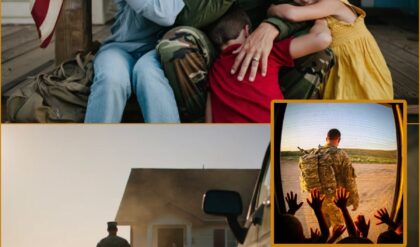
Years later, Lily would stand on that same porch, older now, stronger, with a child of her own on her hip. She would tell him about his uncle Daniel—the way he laughed, the way he always looked back, the way his smile made everything feel okay, even when it wasn’t.
And sometimes, in the quiet of early morning, when the fog rolled in just right, she swore she could see him again—standing in the doorway, helmet under his arm, smiling one last time before stepping into history.
Not as a soldier.
But as a son.
A brother.
A boy who left home at dawn and never truly did.