The gravel crunched beneath their boots as Daniel Hayes fell into step beside Major Whitlock, the temporary airstrip stretching out behind them like a scar that refused to heal. Floodlights flickered overhead, their cones of light carving pale islands in the darkness. Beyond them, the jungle waited—silent, patient, listening.
Hayes didn’t ask where they were going. When a major asked you to walk at midnight, you walked.
“You watched them leave,” Whitlock said, his voice calm, almost conversational. “Hard not to, I imagine.”
“Yes, sir.”
“Last flight,” Whitlock continued. “Last official extraction from Sector Nine.”
Hayes nodded. He’d known that already. Everyone did. The brass had called it a realignment. The soldiers called it what it was.
Abandonment.
They walked in silence for a few moments. The air smelled of wet earth and jet fuel, a combination Hayes knew would follow him into his dreams. He could still see the plane lifting off, its belly lights glowing briefly before disappearing into cloud. Inside were men he’d trained with, fought beside, bled with.
And men he hadn’t been allowed to bring.
Whitlock stopped near the edge of the strip, where mud gave way to grass. He turned to face Hayes, studying him with a look that was more tired than stern.
“You’ve been here a long time, Sergeant,” he said.
“Eighteen months,” Hayes replied. “Longer than most.”
“Long enough to know which orders matter,” Whitlock said. “And which ones get buried.”
Hayes felt something tighten in his chest.
“Sir?”
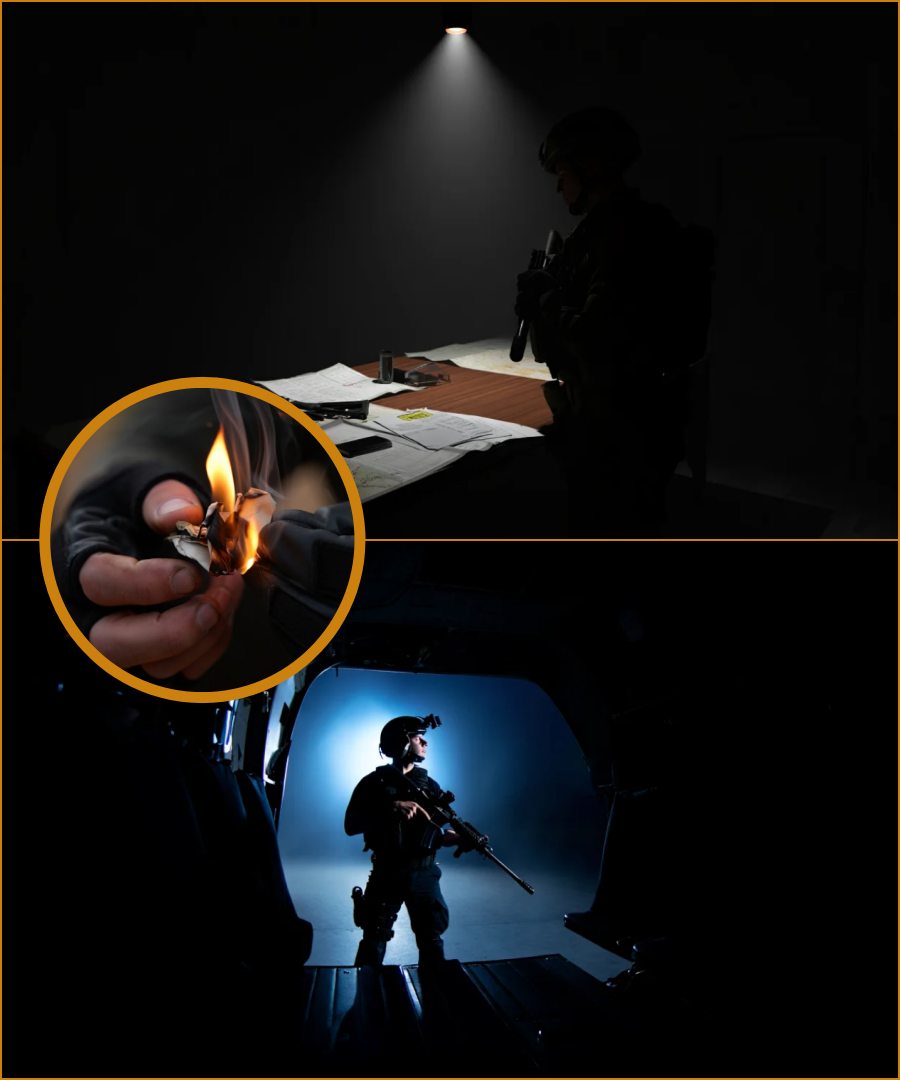
Whitlock reached into his coat and pulled out a folder. No markings. No insignia. Just thick paper, worn at the edges, like it had been opened too many times.
“I’m going to ask you something,” the major said. “And I need you to listen carefully before you answer.”
Hayes straightened. “Yes, sir.”
“Officially,” Whitlock said, “your unit is being redeployed. Effective immediately. You’ll board the next transport at dawn.”
Hayes nodded again.
“Unofficially,” Whitlock continued, “there’s a problem.”
The major opened the folder.
Inside were photographs—grainy, taken from drones and handheld cameras. Villages burned to skeletons. Men in civilian clothes lined up on their knees. Children staring into lenses too old for their faces.
Hayes swallowed.
“These were taken in Grid Delta-Seven,” Whitlock said. “Forty miles east. Intelligence says there’s a local militia using the evacuation gap to clean house. Collaborators. Witnesses. Anyone they don’t like.”
“Why hasn’t Command—” Hayes started.
“Command knows,” Whitlock cut in. “Command also knows that officially, we no longer have assets in that sector.”
Hayes felt the weight of the words settle in.
“Sir,” he said slowly, “you’re saying—”
“I’m saying,” Whitlock replied, “that if something happens out there, it won’t be on any map. It won’t be in any report. And it certainly won’t be acknowledged.”
The two officers behind Whitlock shifted uncomfortably.
Hayes looked back toward the jungle. Somewhere beyond it, people were waiting. Or running. Or already dead.
“How many?” Hayes asked.
Whitlock hesitated. “We don’t know.”
Hayes exhaled through his nose. “And you’re telling me this because…?”
The major met his eyes.
“Because you have a reputation,” he said. “You don’t leave people behind. And because if I give you a direct order, it becomes something I have to answer for.”
Hayes understood then.
This wasn’t an order.
It was a door left open.
“If I walk away,” Hayes said, “you can say you tried.”
“Yes.”
“And if I don’t?”
Whitlock closed the folder. “Then officially, Sergeant Daniel Hayes followed his last standing orders and redeployed at dawn.”
The rain began again, soft at first, tapping against helmets and shoulders like hesitant fingers.
Hayes thought of the men who’d boarded that plane. Of the ones who hadn’t. Of the faces in the photographs.
“How much time?” he asked.
“Six hours,” Whitlock said. “Before the militia reaches the river crossings.”
Hayes nodded once.
“Permission to speak freely, sir?”
Whitlock gave a tired smile. “I wouldn’t have it any other way.”
“You’re asking me to disappear,” Hayes said. “With whatever men I can convince to follow me. Into territory we’ve officially abandoned. To do something we can’t admit happened.”
Whitlock didn’t argue.
Hayes looked down at his hands—scarred, steady. He thought of his wife back home, who had learned not to ask questions she didn’t want answered. He thought of the letter he’d written but not yet sent.
“All right,” he said.
Whitlock’s shoulders sagged with something like relief.
“I had a feeling you’d say that.”
—
They moved quietly.
Hayes didn’t give speeches. He didn’t have to. He found the men who hadn’t packed yet, the ones cleaning rifles that didn’t need cleaning, the ones staring too long at nothing.
“Six hours,” he told them. “No promises. No extraction.”
Not one of them asked why.
They moved before dawn, slipping into the jungle as the rain thickened, the air turning warm and suffocating. Radios stayed silent. Lights stayed off. The world narrowed to breath, footsteps, and the distant thud of artillery that wasn’t meant for them.
They reached the first village at sunrise.
Too late.
Hayes stood in the ruins, smoke curling from blackened beams, the smell of death unmistakable. A child’s shoe lay in the mud, pink and absurdly clean.
Someone knelt beside him.
“Sergeant,” a voice whispered. “Tracks. Fresh.”
They followed them.
The militia had gathered survivors near the river, exactly as intelligence predicted. Men with mismatched uniforms and stolen rifles. Fear passed between them like a shared language.
Hayes raised his fist.
The world held its breath.
Then chaos.
The fight was brutal and fast, violence compressed into minutes that felt like hours. Shots echoed off the water. Men fell. Others ran. Hayes moved on instinct, training carrying him where thought could not.
When it was over, the riverbank was littered with weapons and the sound of crying.
They counted survivors.
More than Hayes had dared hope.
They moved them west, away from the crossings, deeper into territory no one was supposed to be in. Food was scarce. Water scarcer. But they moved.
By nightfall, helicopters thundered overhead.
Hayes raised his rifle, heart pounding—then lowered it as the aircraft hovered, lights blinking in a pattern he recognized.
Whitlock’s voice crackled over the radio.
“Unscheduled extraction,” he said dryly. “You boys really make paperwork difficult.”
Hayes laughed, the sound raw and broken.
—
Months later, back home, Hayes stood in his kitchen reading the news.
Another conflict. Another withdrawal. Another set of names that wouldn’t be printed.
His phone buzzed.
A single message.
They made it across the border. All of them.
Hayes closed his eyes.
Outside, rain tapped softly against the window.
Right on time.