A wave of alarming posts has begun circulating online, claiming that a series of numbers embedded in rap lyrics correspond to alleged crime scenes across multiple states. The narrative, often framed in dramatic language, suggests that music itself may contain hidden confessions tied to real-world violence. While such claims have captured attention, experts warn that they reflect a growing pattern of speculation rather than verified fact.
Many of these posts reference artists like NBA YoungBoy, whose lyrics are known for their raw and emotional intensity. Supporters of the theory argue that recurring numbers or phrases in songs could be interpreted as coded messages. However, music analysts and industry observers emphasize that lyrical patterns are often stylistic choices, not literal admissions of criminal activity.

The claim that “19 bodies” were discovered in connection with any music-related narrative has not been substantiated by credible law enforcement sources. No official reports confirm such a finding tied to a musical figure or “empire.” Authorities typically release detailed information in cases involving multiple victims, and such a significant discovery would be widely documented by major news outlets. In this instance, the absence of verified reporting raises serious questions about the accuracy of the viral narrative.
Experts in media literacy note that these kinds of stories often gain traction because they combine elements of mystery, fear, and celebrity. The idea that popular music could conceal hidden truths is compelling, especially when presented with dramatic phrasing and selective details. However, without corroborating evidence, such claims remain speculative and potentially misleading.
There is also a broader context to consider. Hip-hop, particularly subgenres rooted in street narratives, has long used vivid storytelling to reflect lived experiences, emotions, and environments. References to numbers, locations, or events are frequently symbolic or artistic rather than literal. Interpreting them as direct confessions can oversimplify the creative process and misrepresent the intent behind the music.
Legal experts caution against drawing conclusions based solely on lyrical content. In past cases, courts have debated the role of artistic expression as evidence, often recognizing that music does not necessarily reflect factual events. Treating lyrics as forensic proof risks blurring the line between art and reality, which can have serious consequences for public perception.
The spread of such narratives also highlights the role of social media in amplifying unverified information. Posts framed as revelations or “hidden truths” can quickly reach large audiences, especially when they involve well-known figures. Once shared widely, these claims can take on a sense of credibility, even in the absence of evidence.
For fans, the situation can be confusing. The combination of dramatic storytelling and real-world references creates a sense that something deeper may be unfolding. Yet, without confirmation from reliable sources, it becomes difficult to separate fact from fiction. Analysts recommend approaching such claims with caution, seeking out verified information before accepting or sharing them.
At the same time, the conversation reflects a broader fascination with the intersection of music and reality. Audiences are often drawn to the idea that art might reveal hidden aspects of life, particularly in genres known for their authenticity. This interest, while understandable, can sometimes lead to interpretations that go beyond what the evidence supports.
Ultimately, the viral claims surrounding numbers, lyrics, and alleged crime scenes appear to be part of a larger pattern of online speculation. Without credible confirmation, they should be treated as unverified narratives rather than established facts.
As discussions continue, one thing remains clear: music can be powerful, provocative, and deeply reflective—but it is not, in itself, a forensic record. Understanding the difference is essential in navigating stories that blur the line between creativity and reality.
News

A wave of alarming posts has begun circulating online, claiming that a series of numbers embedded in rap lyrics correspond to alleged crime scenes across multiple states.
A wave of alarming posts has begun circulating online, claiming that a series of numbers embedded in rap lyrics correspond to alleged crime scenes across multiple states. The narrative, often framed in dramatic language, suggests that music itself may contain…

A controversial ruling is sparking fierce debate after Mina Dich, linked to a disturbing t-e:rror plot involving a planned k-n:ife a-t:tack in central London, lost her final legal appeal and now faces deportation.
A high-profile legal ruling has sent shockwaves across the United Kingdom, as a court decision involving national security concerns reignites a deeply polarizing public debate. The case centers on Mina Dich, whose appeal to remain in the country was rejected by the High…

Lynette Hooker’s husband released after missing mom’s disappearance — as harrowing a-b:use photos emerge
The husband of missing boater Lynette Hooker has been released from police custody in connection with her disappearance off a boat in the Bahamas — as horrifying photos of the Michigan mom’s alleged abuse emerged, according to authorities and reports. Brian Hooker,…
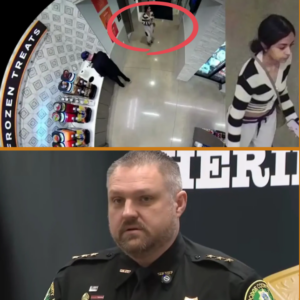
Woman claimed she was detained by ICE for two days — but was actually at hotel getting spa treatments
An Illinois woman who claimed she was detained by ICE for nearly two days was actually relaxing at a hotel getting spa treatments, according to a $1 million defamation suit filed by a county sheriff. US citizen Sundas “Sunny” Naqvi,…
driven by a murderous obsession. He becomes the prime target of a police manhunt led by compassionate detective Ravi Dhillon, played by Nikesh Patel
absorbing and mind-bending thriller to binge-watch this week? ITVX might just have the answer. The chilling crime drama, The Devil’s Hour, arrived on the streaming platform over the weekend – and if you’re a fan of atmospheric psychological series with a supernatural twist,…
But things take a disturbing turn when her name becomes mysteriously linked to a series of brutal murders, pulling her deeper into a web of secrets that blurs the line between reality and something far more sinister.
ooking for an absorbing and mind-bending thriller to binge-watch this week? ITVX might just have the answer. The chilling crime drama, The Devil’s Hour, arrived on the streaming platform over the weekend – and if you’re a fan of atmospheric psychological series with…
End of content
No more pages to load