
Nipah Virus Outbreak in India Triggers Heightened Airport Screenings Across Asia
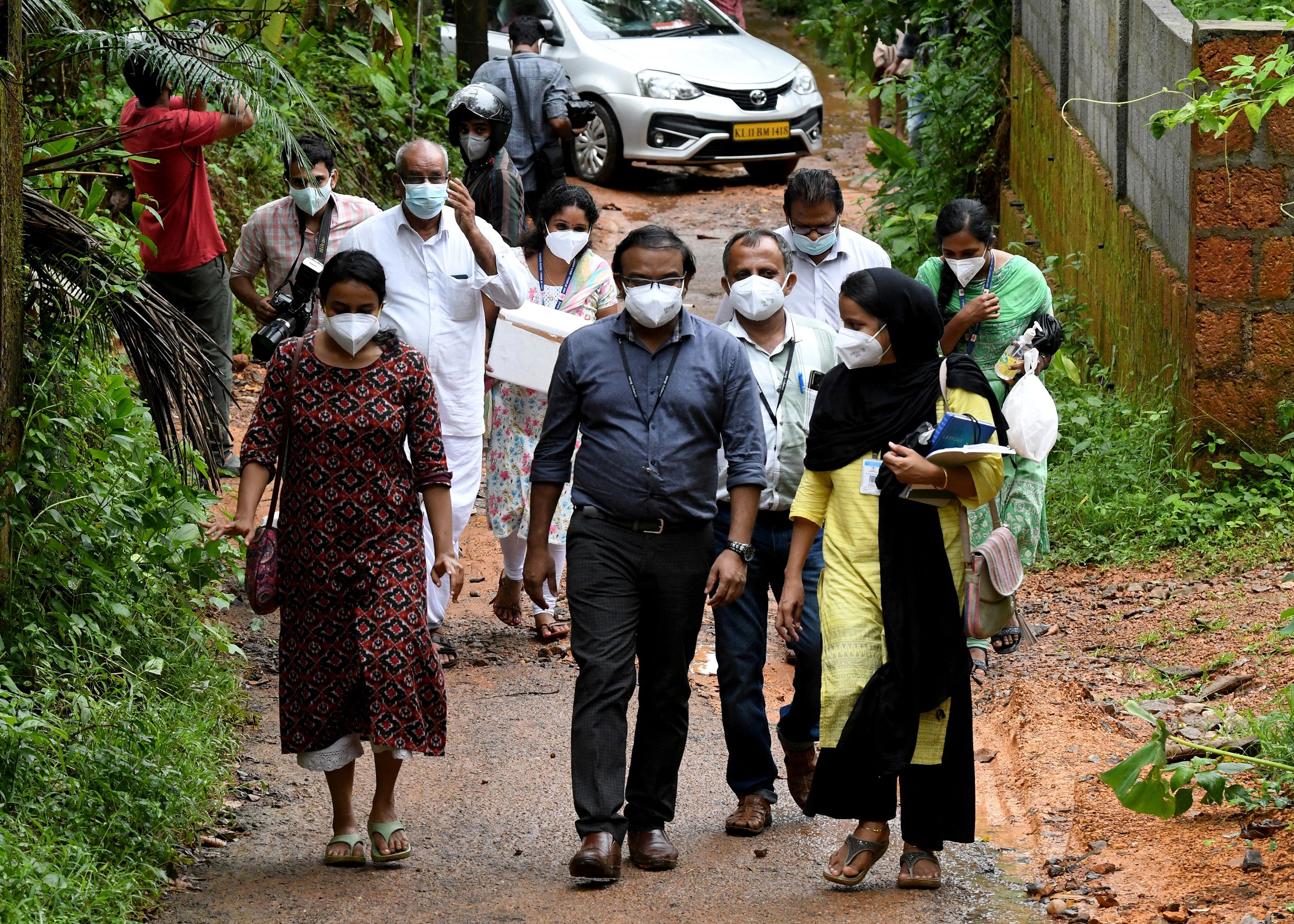
Health authorities across parts of Asia have stepped up airport screenings and surveillance measures following a confirmed outbreak of the deadly Nipah virus in India’s eastern state of West Bengal, reigniting fears of cross-border transmission of one of the world’s most lethal zoonotic diseases.
India’s Ministry of Health confirmed multiple Nipah virus infections in West Bengal this week, including several fatalities. Local officials have declared containment zones in affected districts, restricted movement, and launched aggressive contact-tracing efforts. The outbreak has prompted neighboring countries and regional travel hubs to activate precautionary screening protocols for travelers arriving from India.
Nipah virus, first identified in 1998 during an outbreak in Malaysia, is transmitted from animals—most commonly fruit bats—to humans, either directly or through contaminated food. Human-to-human transmission is also possible, particularly in healthcare settings. The virus has a fatality rate ranging from 40% to as high as 75%, according to the World Health Organization (WHO), depending on the outbreak and response capacity.
Airport Measures Across Asia
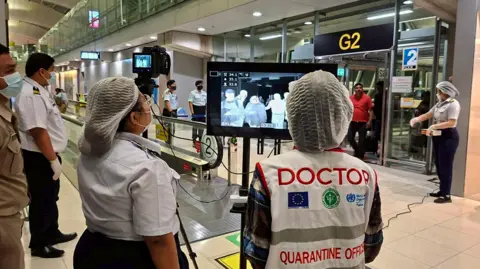
Airports in Bangladesh, Nepal, Sri Lanka, Thailand, Singapore, and parts of Southeast Asia have introduced enhanced health checks, including temperature screening, health declaration forms, and visual assessments for travelers arriving from India. Some countries have advised airlines to alert crew members to watch for passengers showing symptoms such as fever, headache, respiratory distress, or neurological signs.
Singapore’s Ministry of Health said it is “closely monitoring the situation” and has activated its public health preparedness protocols, while Thailand’s Department of Disease Control confirmed additional screening at major international airports in Bangkok and Phuket.
Although no imported Nipah cases have been reported outside India so far, regional health agencies say the measures are precautionary and aimed at early detection rather than travel restrictions.
Situation in West Bengal
In West Bengal, state authorities have closed schools in affected areas and restricted large public gatherings. Hospitals have been instructed to isolate suspected cases immediately and ensure strict infection-control procedures. Specialized medical teams have been deployed to trace contacts and monitor individuals who may have been exposed.
Health officials believe the outbreak may be linked to consumption of food contaminated by fruit bats, a known reservoir of the virus, though investigations are ongoing. Samples have been sent to national virology laboratories for genomic analysis to better understand the strain involved.
India has experienced several Nipah outbreaks in recent years, most notably in Kerala, where swift public-health responses helped contain spread. Experts say lessons learned from those outbreaks have improved India’s readiness, though challenges remain due to population density and mobility.
Global Health Concerns
The WHO has listed Nipah virus as a priority pathogen because of its high mortality rate and lack of approved vaccines or specific antiviral treatments. Care is largely supportive, focusing on managing symptoms and preventing complications.
Public-health experts stress that while Nipah is not as easily transmissible as respiratory viruses like COVID-19, its severity makes early detection and containment critical.
“Even a small cluster of cases requires immediate action,” said a regional infectious-disease specialist. “Cross-border vigilance is essential, especially in areas with high travel volumes.”
Public Advice and Outlook
Health authorities across Asia are urging the public not to panic but to remain informed. Travelers returning from affected areas are advised to seek medical attention if they develop symptoms within 5 to 14 days of travel. Governments have also reminded citizens to avoid consuming raw date palm sap or fruits that may have been exposed to bats when traveling in affected regions.
Nipah Virus Outbreak in India Triggers Heightened Airport Screenings Across Asia
Health authorities across parts of Asia have stepped up airport screenings and surveillance measures following a confirmed outbreak of the deadly Nipah virus in India’s eastern state of West Bengal, reigniting fears of cross-border transmission of one of the world’s most lethal zoonotic diseases.
India’s Ministry of Health confirmed multiple Nipah virus infections in West Bengal this week, including several fatalities. Local officials have declared containment zones in affected districts, restricted movement, and launched aggressive contact-tracing efforts. The outbreak has prompted neighboring countries and regional travel hubs to activate precautionary screening protocols for travelers arriving from India.
Nipah virus, first identified in 1998 during an outbreak in Malaysia, is transmitted from animals—most commonly fruit bats—to humans, either directly or through contaminated food. Human-to-human transmission is also possible, particularly in healthcare settings. The virus has a fatality rate ranging from 40% to as high as 75%, according to the World Health Organization (WHO), depending on the outbreak and response capacity.
Airport Measures Across Asia
Airports in Bangladesh, Nepal, Sri Lanka, Thailand, Singapore, and parts of Southeast Asia have introduced enhanced health checks, including temperature screening, health declaration forms, and visual assessments for travelers arriving from India. Some countries have advised airlines to alert crew members to watch for passengers showing symptoms such as fever, headache, respiratory distress, or neurological signs.
Singapore’s Ministry of Health said it is “closely monitoring the situation” and has activated its public health preparedness protocols, while Thailand’s Department of Disease Control confirmed additional screening at major international airports in Bangkok and Phuket.
Although no imported Nipah cases have been reported outside India so far, regional health agencies say the measures are precautionary and aimed at early detection rather than travel restrictions.
Situation in West Bengal
In West Bengal, state authorities have closed schools in affected areas and restricted large public gatherings. Hospitals have been instructed to isolate suspected cases immediately and ensure strict infection-control procedures. Specialized medical teams have been deployed to trace contacts and monitor individuals who may have been exposed.
Health officials believe the outbreak may be linked to consumption of food contaminated by fruit bats, a known reservoir of the virus, though investigations are ongoing. Samples have been sent to national virology laboratories for genomic analysis to better understand the strain involved.
India has experienced several Nipah outbreaks in recent years, most notably in Kerala, where swift public-health responses helped contain spread. Experts say lessons learned from those outbreaks have improved India’s readiness, though challenges remain due to population density and mobility.
Global Health Concerns
The WHO has listed Nipah virus as a priority pathogen because of its high mortality rate and lack of approved vaccines or specific antiviral treatments. Care is largely supportive, focusing on managing symptoms and preventing complications.
Public-health experts stress that while Nipah is not as easily transmissible as respiratory viruses like COVID-19, its severity makes early detection and containment critical.
“Even a small cluster of cases requires immediate action,” said a regional infectious-disease specialist. “Cross-border vigilance is essential, especially in areas with high travel volumes.”
Public Advice and Outlook
Health authorities across Asia are urging the public not to panic but to remain informed. Travelers returning from affected areas are advised to seek medical attention if they develop symptoms within 5 to 14 days of travel. Governments have also reminded citizens to avoid consuming raw date palm sap or fruits that may have been exposed to bats when traveling in affected regions.
At present, officials emphasize that the risk to the general public outside India remains low. However, the outbreak has underscored the persistent threat posed by zoonotic diseases and the importance of regional cooperation in disease surveillance.
As investigations continue in West Bengal, health agencies across Asia remain on alert, hoping swift containment will prevent the virus from crossing borders once again.
At present, officials emphasize that the risk to the general public outside India remains low. However, the outbreak has underscored the persistent threat posed by zoonotic diseases and the importance of regional cooperation in disease surveillance.
As investigations continue in West Bengal, health agencies across Asia remain on alert, hoping swift containment will prevent the virus from crossing borders once again.
News
“I LOVED HER IN SILENCE FOR 40 YEARS” — CLIFF’S SH0CKING STAGE CONFESSION!
Cliff Richard, 85, Breaks Down in Tears on Stage in Brisbane: A Heart-Wrenching Tribute to His Late Sister Leaves Arena in Silence Brisbane, Australia — No one in the sold-out Brisbane Convention & Exhibition Centre was prepared for the silence…
SCALDING REV.ENGE: Watch the vile steaming urn a.ttack that just broke the entire internet!
SCALDING SURPRISE: THE “BEAUTY IN BLACK” URN ATTACK THAT BROKE THE INTERNET HOLLYWOOD — There are moments in television history that transcend the screen and become cultural flashpoints, and Tyler Perry’s latest Netflix juggernaut, Beauty in Black, has just delivered…
STUDIO TERROR: See the unthinkable moment Seacrest confronted a fan after that vile three-word scream!
STUDIO SILENCED: THE THREE-WORD SCREAM THAT HALTED ‘WHEEL’ AND BROKE THE INTERNET CULVER CITY, CA — The bright neon lights of Stage 11 at Sony Pictures Studios usually signify a place of predictable, family-friendly fun. But last night, that polished…
Truckie Smashes Armed Carjackers with Spirit Level in Explosive Melbourne Servo Fight!
Heroic Truck Drivers Fight Off Armed Carjackers in Shocking Melbourne Service Station Brawl In a dramatic daylight confrontation that has gripped Melbourne, two delivery truck drivers bravely defended themselves against an alleged armed carjacking attempt at a busy service station…
LEAKED & FORBIDDEN: Gia Fleur’s Toxic Dinner Party Rampage with X-Rated Insult – What They Cut Will Blow Your Mind!
Married At First Sight Australia: Gia Fleur Exposed in Explosive Dinner Party Drama – Unseen Footage Rocks the Experiment Hanoi, March 23, 2026 – The 2026 season of Married At First Sight Australia (MAFS) continues to dominate headlines, with bride…
CATASTROPHIC FALL: Italian Cyclist Launched Headfirst Off Cipressa – Broken Ribs & Shoulder Terror!
Debora Silvestri Suffers Serious Injuries in Dramatic Crash at Women’s Milan-San Remo San Remo, Italy – March 22, 2026 – A terrifying high-speed crash on the descent of the iconic Cipressa climb overshadowed the women’s Milan-San Remo classic on Saturday,…
End of content
No more pages to load