Britain’s Last Line of Defence: The Untold True Story of the Home Guard

When the Home Guard was created in the dark days of May 1940, Britain stood on the brink of invasion. France was collapsing under the Nazi advance, the evacuation at Dunkirk was underway, and the fear of German troops landing on British beaches was no longer theoretical—it felt imminent. What emerged in response was not the comic image later immortalised in Dad’s Army, but a vast civilian fighting force that became Britain’s final shield against invasion.
On 14 May 1940, the Secretary of State for War, Anthony Eden, made a dramatic radio broadcast calling for volunteers aged between 17 and 65 to join a new emergency force known as the Local Defence Volunteers (LDV). The response was overwhelming. Within just seven weeks, nearly 1.5 million men had stepped forward. By July, the force was officially renamed the Home Guard—a title designed to reflect its growing importance and inspire national confidence.
The early days were chaotic. Britain’s desperate shortage of weapons meant that many early recruits drilled with broomsticks instead of rifles and wore improvised uniforms. Some units were issued with rusty First World War rifles; others received pikes or petrol bombs for anti-tank defence. Yet despite this rag-tag beginning, the Home Guard rapidly transformed into a disciplined and increasingly well-equipped force that ultimately numbered around 1.7 million men.
Far from being made up solely of elderly or infirm volunteers, the Home Guard drew from an extraordinary cross-section of society. It included veterans of the Boer War and World War One, underage teenagers eager to fight, and fit men whose essential civilian jobs—such as shipbuilding, mining, and transport—exempted them from frontline military service. Together, they trained for the unthinkable: a German invasion of Britain itself.

Newly discovered documents belonging to Major James Webster, who commanded two Home Guard battalions in Ipswich, shed striking light on just how seriously this preparation was taken. The papers reveal that his men underwent extensive weapons training, including live-fire rifle practice, grenade drills, and the use of light machine guns. They also carried out roadblock exercises, learning how to stop armoured columns with limited resources, and participated in large-scale invasion simulations designed to test Britain’s readiness to repel German landings.
The documents were discovered by Major Webster’s granddaughter, Helen, in the attic of her home in Truro, Cornwall, after a roof leak exposed long-forgotten boxes. Recognising their importance, the family donated them to the Great War Huts museum near Bury St Edmunds in Suffolk, where historians have begun carefully analysing the material.
What the papers confirm is that the Home Guard’s role extended far beyond simple local patrols. Its members were trained to defend airfields and railways, guard factories and fuel depots, man anti-aircraft guns, and even assist in bomb disposal after Luftwaffe raids. Along the coast, Home Guard units operated artillery batteries and watched constantly for signs of enemy landings. In some areas, secret “stay-behind” units were trained to carry out sabotage behind enemy lines if invasion succeeded.
The risks they faced were real and deadly. Over the course of the war, 1,206 Home Guard members were killed on duty or died of wounds sustained while serving. Some perished in training accidents involving explosives and live ammunition; others were killed while defusing bombs or during air raids. These losses stand as a sober reminder that the Home Guard was not merely a symbolic force, but an active and dangerous part of Britain’s wartime defence.
By late 1944, the strategic picture had changed entirely. Allied forces were advancing rapidly across Europe, and the threat of German invasion had evaporated. On 3 December 1944, after more than four years of service, the Home Guard was formally stood down. There were no grand victory parades—just quiet ceremonies in towns and villages across the country as men returned fully to civilian life.
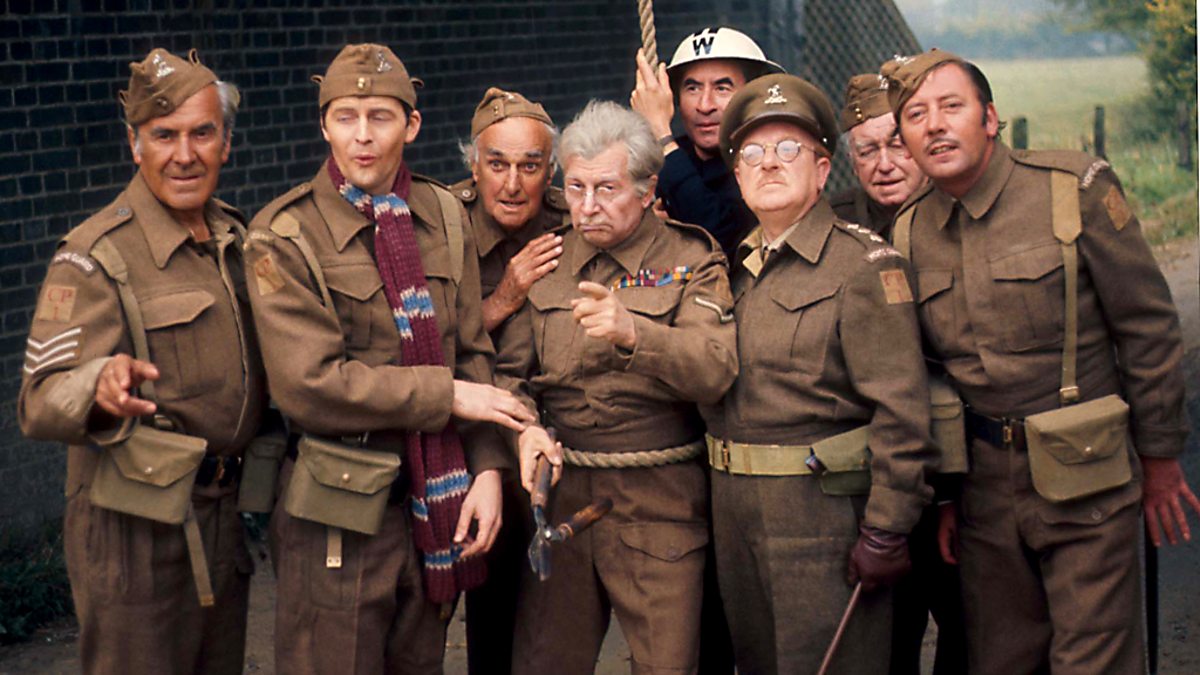
Yet its legacy endured. The Home Guard had provided Britain with crucial reassurance during its darkest hour—a living embodiment of national resistance. It proved that ordinary citizens, armed with courage, training, and determination, could stand ready to defend their homeland against the most formidable military power in Europe.
Today, while popular culture remembers the Home Guard through comedy and caricature, the rediscovered records of men like Major James Webster reveal a far more formidable truth: beneath the humour was a serious fighting force, forged in fear, discipline, and patriotic resolve. Britain’s “last line of defence” was never a joke—it was a nation’s shield when it needed one most.