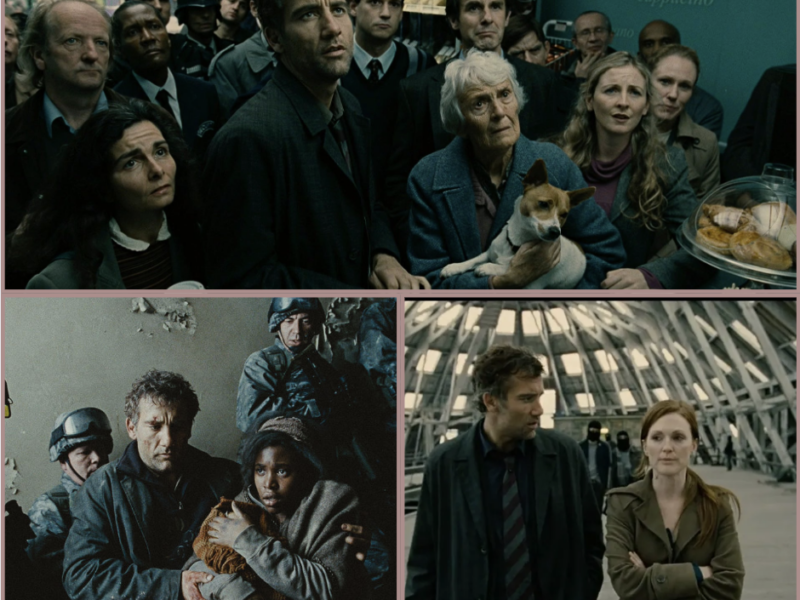
‘VISIONARY MASTERPIECE’ DYSTOPIAN THRILLER HAILED AS ONE OF THE GREATEST SCI-FI FILMS EVER MADE STILL FEELS UNCANNILY RELEVANT TODAY!
‘Visionary masterpiece’ dystopian thriller hailed as one of the greatest sci-fi films ever made
Children of Men: The Haunting Future Thriller That Feels More Relevant Than Ever
Few science-fiction films have earned the enduring acclaim and cultural significance achieved by Children of Men. Directed by Alfonso Cuarón and released in 2006, the film has gradually become recognized as one of the greatest dystopian dramas ever made, praised for its breathtaking cinematography, emotional storytelling, and unsettling vision of humanity’s future.
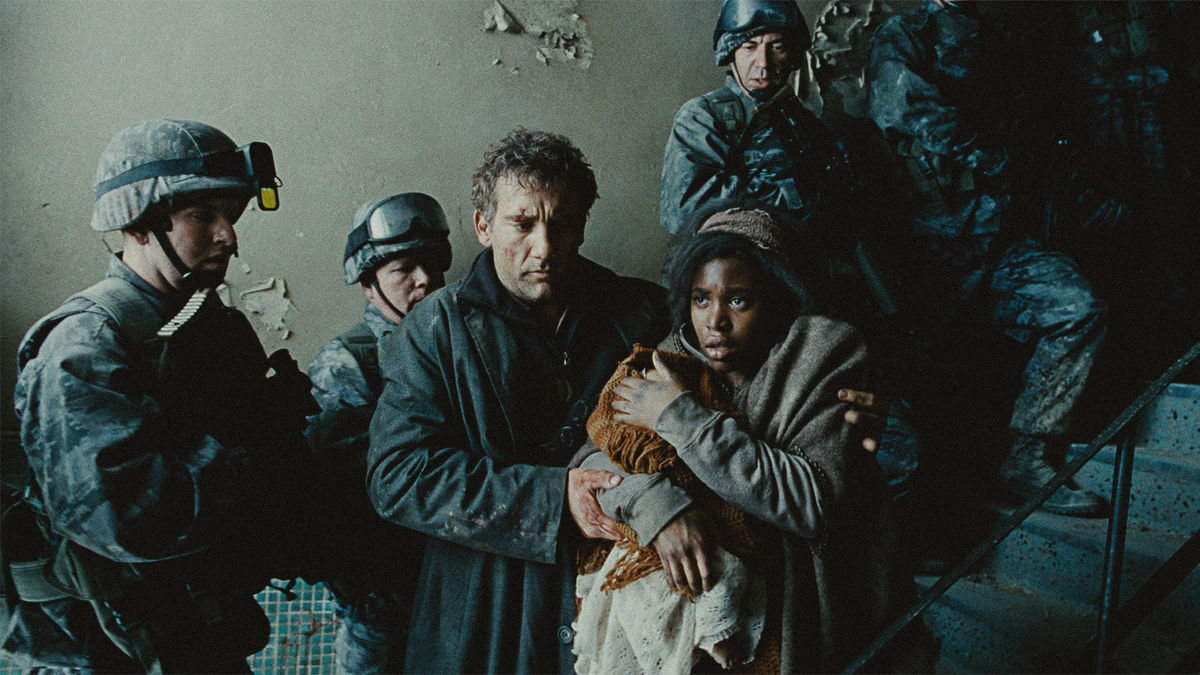
Based loosely on P. D. James’s novel of the same name, the film presents a world unlike most traditional science fiction. There are no alien invasions or futuristic gadgets dominating the story. Instead, it explores a far more terrifying possibility: a world where humanity has mysteriously lost the ability to reproduce.
By 2027, nearly two decades have passed since the last child was born.
Civilization is collapsing.
Governments have become increasingly authoritarian, economies are crumbling, and fear dominates daily life. Britain remains one of the few functioning nations, but it maintains order through harsh immigration policies and constant surveillance. Refugees are rounded up, violence is widespread, and hope itself has become a fading memory.
At the center of the story is Theo Faron, portrayed brilliantly by Clive Owen.
Once an idealistic activist, Theo has become disillusioned and emotionally detached after personal tragedy shattered his belief in the future. He drifts through life with little purpose until his former wife Julian, played by Julianne Moore, unexpectedly asks for his help.
Julian belongs to an underground activist group fighting for immigrant rights.
Her request seems straightforward at first: help transport a young refugee named Kee to safety. But Theo soon discovers that Kee, played by Clare-Hope Ashitey, possesses a secret capable of changing the fate of humanity itself.
Suddenly, what begins as a simple mission becomes a desperate race against time.
As government forces, armed militias, and competing factions close in, Theo finds himself risking everything to protect the one thing the world has lost—hope.
One of the film’s greatest strengths lies in its realism.
Unlike many dystopian movies, Children of Men feels frighteningly believable. Its themes of political instability, refugee crises, social division, and institutional collapse resonate even more strongly today than they did when the film first premiered.
The supporting cast is equally impressive.
Michael Caine delivers one of his most memorable performances as Jasper, an aging political cartoonist who provides both humor and humanity amid the bleakness. Chiwetel Ejiofor plays Luke, a revolutionary leader whose methods become increasingly extreme, while Charlie Hunnam appears as Patric, a trusted member of Julian’s group.
Visually, the film is extraordinary.
Alfonso Cuarón and cinematographer Emmanuel Lubezki crafted some of the most famous long takes in cinema history. The intense car ambush sequence and the climactic urban warfare scenes remain astonishing achievements of filmmaking. These uninterrupted shots immerse viewers directly into the chaos, making every moment feel immediate and terrifyingly real.
Yet beneath the action and suspense lies a deeply emotional story.
At its core, Children of Men is about redemption, sacrifice, and the enduring power of hope. Theo’s journey transforms him from a broken man into an unlikely protector willing to risk everything for the possibility of a better future.
Critics and audiences have increasingly recognized the film’s brilliance over the years. What initially performed modestly at the box office has since become regarded as a modern masterpiece and one of the finest science-fiction films ever made.
Its influence can be seen across countless films and television series that followed.
Nearly two decades after its release, Children of Men remains as powerful, relevant, and emotionally devastating as ever. Combining stunning visuals, remarkable performances, and profound themes, it stands as a reminder that even in humanity’s darkest moments, hope can still survive.
Dark, intelligent, and unforgettable, it is not simply a science-fiction film—it is one of the defining cinematic experiences of the 21st century.