In a move that stunned the advertising world and captivated millions, Budweiser bypassed the traditional Super Bowl playbook entirely this year by releasing its emotional centerpiece commercial — “The Soul of Icons” — two full weeks before kickoff. What could have been dismissed as a risky gamble quickly turned into a masterstroke: the ad became the conversation, dominating social media, news cycles, and living-room discussions long before the game even started.
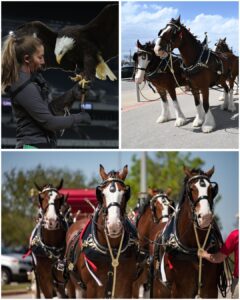
No celebrities. No flashy CGI. No countdown teasers or multimillion-dollar hype machine. Instead, Budweiser delivered a quiet, intimate 60-second spot that felt more like a short film than a commercial. Set to the raw, soaring guitar of Lynyrd Skynyrd’s “Free Bird,” the story follows a Clydesdale foal and a bald eagle chick being raised side by side on a sprawling American farm. We watch them grow up together — playing in the fields, nuzzling in the barn, learning to stand on their own. The foal becomes the majestic Budweiser Clydesdale; the chick grows into the proud American eagle. The final shot lingers on them standing shoulder to shoulder at sunrise, symbols of strength, freedom, and unbreakable spirit.
The simplicity is what made it devastating. No voice-over preaching patriotism. No product shots until the very last frame. Just pure, wordless storytelling that tapped straight into pride, memory, and what those two icons still mean to everyday Americans — especially veterans, first responders, and anyone who’s ever felt the pull of the red, white, and blue.
Social media reaction was immediate and overwhelming. Within minutes, the ad racked up tens of millions of views. Reaction videos flooded TikTok and YouTube — grown men wiping away tears, families hugging, veterans saluting the screen. “This isn’t an ad… this is America,” one viral post read. Another user wrote: “Budweiser didn’t wait for the Super Bowl. They made the Super Bowl come to them.” The hashtag #SoulOfIcons trended worldwide for days, with clips shared by everyone from sports anchors to military pages to everyday viewers who suddenly felt something they hadn’t felt in a long time: unity.
Advertising insiders were floored. By dropping early, Budweiser broke one of the unwritten Super Bowl rules: never give away your big play before game day. Yet the gamble paid off spectacularly. The ad didn’t have to compete with the halftime show, celebrity cameos, or million-dollar slots — it became the story itself. Media outlets ran features, pundits debated its emotional impact, and competitors watched helplessly as Budweiser owned the cultural conversation for two full weeks.
The creative team behind the spot credited its power to restraint. “We didn’t want noise,” said the agency lead. “We wanted feeling. When you strip away everything else, what’s left is pride, memory, and the simple truth that some symbols still mean something real.” The choice of “Free Bird” — a song about longing, freedom, and bittersweet farewell — amplified the emotion without ever feeling manipulative.
For Budweiser, the early release was a deliberate flex: when the feeling is this strong, you don’t wait for the big game — you become the big game. And in 2026, when so much feels fractured, “The Soul of Icons” reminded millions what unity still feels like.