‘Powerful and unforgettable’ World War II miniseries follows five young friends whose lives are torn apart by war.
‘Powerful and unforgettable’ World War II miniseries remains one of Germany’s finest television dramas
Generation War: The Epic Story of Five Friends Whose Lives Are Torn Apart by the Second World War
Few war dramas have explored the devastating human cost of World War II with the emotional depth and moral complexity of Generation War. Originally released in Germany under the title Unsere Mütter, unsere Väter (“Our Mothers, Our Fathers”), the acclaimed three-part miniseries became an international success, earning widespread praise for its powerful performances, cinematic production, and unflinching portrayal of a generation forever changed by conflict.
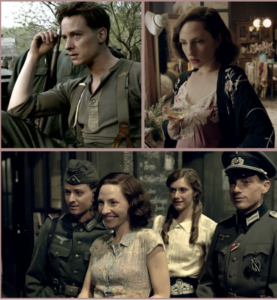
Premiering in 2013, the series follows five close friends in Berlin who gather for one final evening together in the summer of 1941. Filled with optimism, they believe the war will soon be over and promise to reunite by Christmas. Instead, the years that follow test their friendships, beliefs, and humanity in ways none of them could have imagined.
At the heart of the story are brothers Wilhelm and Friedhelm Winter.
Wilhelm, portrayed by Volker Bruch, is a loyal Wehrmacht officer who initially believes in duty and honor. His younger brother Friedhelm, played by Tom Schilling, is sensitive and intellectual, reluctant to embrace violence. As the war intensifies, both men undergo profound transformations, confronting impossible moral choices on the brutal Eastern Front.
Back home, the remaining friends face battles of their own.
Charlotte, played by Miriam Stein, volunteers as an army nurse, believing she is serving her country with compassion. Greta, portrayed by Katharina Schüttler, dreams of becoming a famous singer while navigating an increasingly dangerous political landscape. Meanwhile, Viktor Goldstein, played by Ludwig Trepte, faces persecution simply because he is Jewish, forcing him into a desperate struggle for survival.
Rather than focusing solely on military campaigns, Generation War tells an intensely personal story about ordinary young people whose hopes and ideals are gradually destroyed by war. Each character is forced to confront difficult decisions that blur the lines between courage, survival, guilt, and responsibility.
One of the series’ greatest strengths is its refusal to present simplistic heroes or villains.
Instead, it examines how fear, propaganda, ideology, and desperation shape individual choices during extraordinary circumstances. The result is a nuanced portrait of a generation caught between personal morality and the demands of a brutal regime.
Visually, the miniseries rivals many major Hollywood productions.
Large-scale battle sequences are recreated with remarkable realism, while the cinematography captures both the devastation of the front lines and the emotional isolation experienced by the characters. Combined with an evocative musical score and meticulous period detail, the production creates an immersive viewing experience that feels both epic and deeply intimate.
The performances received widespread acclaim, particularly those of Volker Bruch and Tom Schilling, whose portrayals of two brothers evolving in dramatically different ways provide the emotional backbone of the story. The chemistry among the five central actors makes their friendships feel authentic, making every loss and betrayal even more heartbreaking.
Upon its release, Generation War sparked significant discussion both inside and outside Germany. Critics praised its ambitious storytelling and willingness to examine Germany’s wartime past through the experiences of ordinary citizens, while audiences admired its emotional honesty and cinematic quality. Although some aspects of its historical interpretation prompted debate, the series was widely recognized as one of the most significant European television productions of the decade.
More than a traditional war drama, Generation War is an emotional exploration of friendship, innocence, loyalty, and the lasting scars left by history. With unforgettable performances, breathtaking production values, and a story that refuses easy answers, it remains one of the finest World War II miniseries ever produced and an essential watch for anyone interested in powerful historical storytelling.