Netflix took a bold gamble with Kaleidoscope, an eight-episode heist limited series that premiered on January 1, 2023, and quickly became one of the platform’s most talked-about experiments. Created by Eric Garcia, the show tells the story of a massive, meticulously planned $7 billion diamond heist — but with a revolutionary twist: the episodes are designed to be watched in any order the viewer chooses. Each episode is labeled with a different color of the rainbow (from “Yellow: 6 Weeks Before” to “Violet: 24 Years Before”), and Netflix’s interface allows you to start anywhere. The narrative remains coherent no matter the sequence, revealing the full story through non-linear fragments.
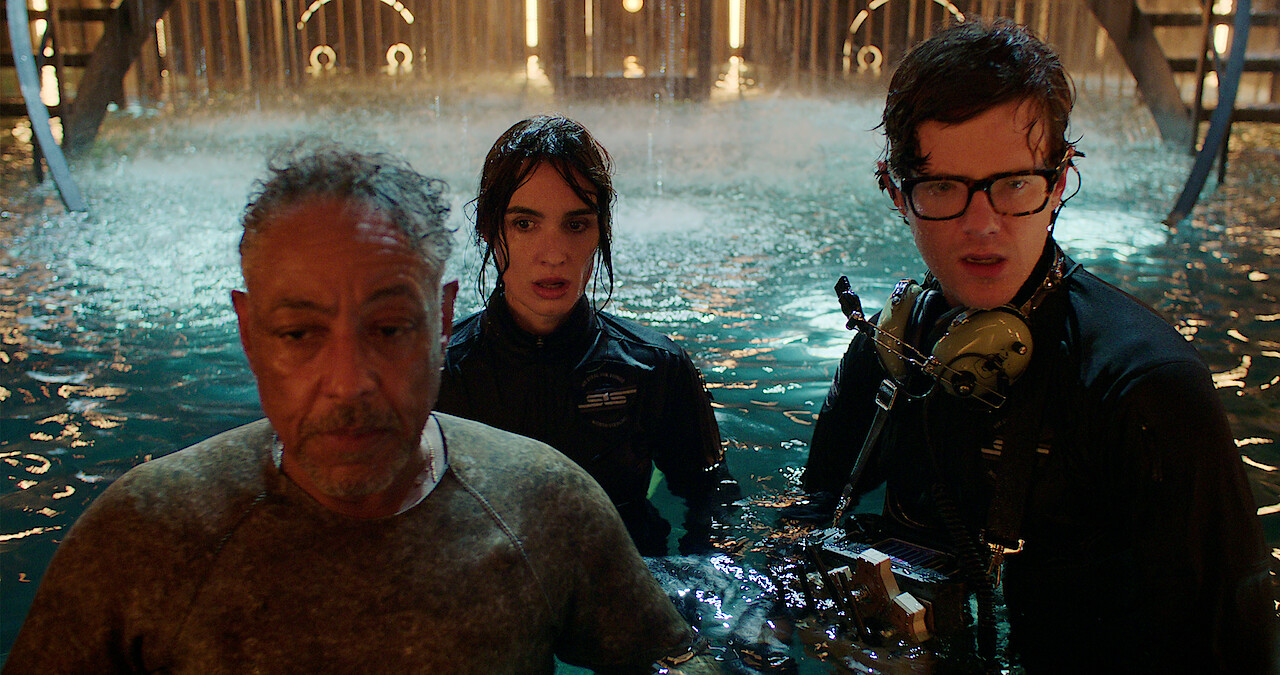
The central plot revolves around master thief Leo Pap (Giancarlo Esposito), a man recently released from prison who assembles a crew for the ultimate score: breaking into the heavily fortified vault of an elite diamond exchange in New York City. The heist is set against the backdrop of Hurricane Sandy in 2012, adding chaos and opportunity. Leo’s team includes his estranged daughter Hannah (Tati Gabrielle), childhood friend Stan (Jai Courtney), volatile explosives expert Judy (Rosaline Elbay), safecracker Bob Goodwin (Jared Abrahamson), and the mysterious Roger Salas (Rufus Sewell), a former partner turned high-powered security consultant who now guards the very vault Leo plans to rob.

What makes Kaleidoscope truly unique is its structure. The episodes jump across a 24-year timeline — from a childhood betrayal in the 1990s to the heist itself in 2012 and its aftermath in 2015 — but each piece fits regardless of viewing order. The color-coded titles serve as chronological anchors: “Pink: 6 Months After” shows the fallout, “Green: 7 Years Before” reveals early betrayals, “Blue: 5 Days Before” builds tension, and so on. The final episode, “White: The Heist,” is designed to be watched last for maximum payoff, though Netflix allows viewers to jump straight to it if they choose. The result is a puzzle-box narrative that rewards rewatching and discussion — no two viewing experiences are exactly the same.
Giancarlo Esposito anchors the series with a quiet, commanding performance. His Leo is a man shaped by regret, loyalty, and a lifetime of calculated risks — a far cry from his chilling Gus Fring in Breaking Bad, yet just as magnetic. The ensemble cast is uniformly strong: Rufus Sewell brings oily menace as the antagonist, Jai Courtney delivers volatile energy as Stan, and Tati Gabrielle shines as Hannah, torn between her father’s world and her own moral compass.
Visually, Kaleidoscope is sleek and atmospheric. The heist sequences are tense and tactile — lock-picking, laser grids, flooding vaults — while the non-linear storytelling keeps viewers on edge, constantly re-evaluating motives and alliances. The show’s color palette shifts subtly with each episode, reflecting both the timeline and the emotional tone, creating a visual language that mirrors the fractured narrative.
Critically, Kaleidoscope received strong praise for its ambition and execution. Variety called it “a clever, stylish heist series that turns structure into storytelling,” while The Guardian noted that “the non-linear format isn’t a gimmick — it’s the point.” Some critics found the puzzle-box approach occasionally frustrating, but most agreed the payoff in the final episodes was worth the effort.
The series also sparked real-world discussion about viewing habits in the streaming era. Netflix reported unusually high completion rates and repeat watches, as fans experimented with different orders to uncover new connections and details. The show’s success proved that innovative format can still captivate audiences in an oversaturated market.