Nearly seven years after its release, The Good Liar remains one of the most elegantly twisted psychological thrillers of the past decade, a sophisticated cat-and-mouse game elevated by the once-in-a-lifetime pairing of Helen Mirren and Ian McKellen. Directed by Bill Condon (Gods and Monsters, Beauty and the Beast), the film adapts Nicholas Searle’s 2016 novel into a sleek, slow-burn drama about greed, identity, and the dangerous allure of reinvention.
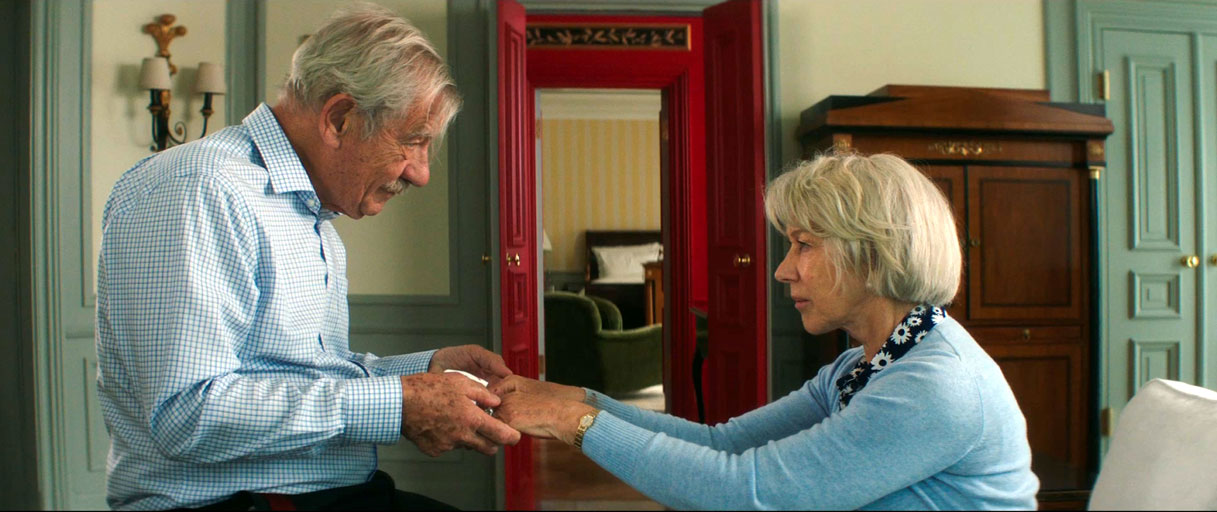
The story begins in modern-day London, where Roy Courtnay (McKellen), a suave but ruthless con man in his eighties, meets Betty McLeish (Mirren) through an online dating site for seniors. Roy, a career criminal who specializes in elaborate financial scams with his longtime partner Vincent (Jim Carter), sees Betty as an easy mark — a lonely widow with a substantial fortune. Betty, still grieving the death of her husband, seems vulnerable, trusting, and eager for companionship. What follows is a meticulously planned swindle that appears to unfold exactly as Roy intends — until the layers of deception begin to peel back, revealing that both players have been hiding far more than the other ever suspected.

Mirren and McKellen are simply magnificent together. McKellen plays Roy with silky charm and quiet menace, a man who has spent a lifetime manipulating others and now believes he can outmaneuver one more mark. Mirren, in one of her most understated yet devastating performances, turns Betty into a figure of both fragility and steel — a woman who has endured more than anyone realizes. Their chemistry crackles with tension, attraction, and mutual calculation; every glance, every polite smile, every shared dinner feels like a chess move in a game where both believe they hold the advantage.
Condon directs with elegant restraint, allowing the actors’ performances to carry the weight of the story. The film’s visual style — muted colors, elegant interiors, and London’s rainy streets — mirrors the characters’ carefully constructed facades. The pacing is deliberate: the first half lures you into believing Roy’s plan is flawless, while the second half dismantles everything with a series of revelations that are both shocking and perfectly logical in hindsight.
The supporting cast adds depth without overshadowing the leads. Jim Carter’s Vincent is quietly menacing, a man who has enabled Roy’s schemes for decades and now fears the consequences of change. Russell Tovey and Phil Dunster play Betty’s protective grandson and his boyfriend, whose suspicions about Roy drive much of the second-act tension.
Critics praised the film for its intelligence and performances. The Guardian called it “a deliciously dark pleasure,” while The New York Times highlighted Mirren and McKellen’s “masterful dance of deception.” With a 64% critic score and 70% audience score on Rotten Tomatoes, the film has grown in appreciation over time, especially among fans who admire its refusal to rely on cheap shocks or over-the-top violence.
At its core, The Good Liar is a story about masks — the ones we wear for the world, the ones we wear for our partners, and the ones we wear for ourselves. It asks how far someone will go to protect a lie, and what happens when two master manipulators finally meet their match. The final act delivers one of the most satisfying twists in recent memory, one that feels earned rather than forced, and leaves audiences both stunned and deeply satisfied.
Now streaming on various platforms, The Good Liar is essential viewing for anyone who loves sophisticated thrillers with rich characters and moral complexity. It’s not loud or flashy — it’s quiet, clever, and devastatingly effective. In a world of reboots and sequels, this is a rare original that proves great actors and a sharp script are still the ultimate combination.
Helen Mirren and Ian McKellen don’t just act — they duel. And in this film, the audience wins.