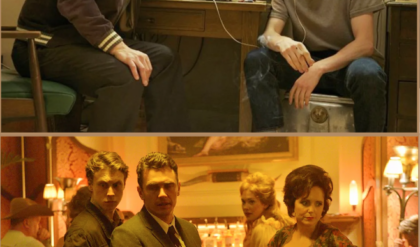
Nearly a decade after its finale, Boardwalk Empire (2010–2014) remains one of HBO’s most ambitious and visually stunning crime dramas, a sprawling epic that chronicled the rise and fall of Atlantic City during America’s Prohibition era. Created by Terence Winter (The Sopranos) and executive produced by Martin Scorsese (who directed the pilot), the series transformed the history of bootlegging, corruption, and organized crime into a richly textured portrait of ambition, loyalty, and inevitable downfall.

The show centers on Enoch “Nucky” Thompson (Steve Buscemi), the real-life political boss Enoch L. Johnson reimagined as a complex anti-hero. Nucky is Atlantic City’s unofficial ruler — a corrupt treasurer who controls the liquor trade, bribes officials, and navigates alliances with gangsters like Al Capone (Stephen Graham), Lucky Luciano (Vincent Piazza), and Arnold Rothstein (Michael Stuhlbarg). What begins as a story of Prohibition profiteering evolves into a brutal examination of power, betrayal, and the cost of survival in a lawless world.

Buscemi delivers a career-defining performance as Nucky — charming yet ruthless, calculating yet vulnerable, a man who believes he can control chaos until it consumes him. The supporting cast is exceptional: Kelly Macdonald as Margaret Schroeder, Nucky’s moral compass and eventual wife; Michael Shannon as the zealous federal agent Nelson Van Alden; Shea Whigham as the volatile Eli Thompson; and Michael Kenneth Williams as the tragic Chalky White. Each season introduces new historical figures — from Capone’s rise in Chicago to the emergence of Meyer Lansky and Bugsy Siegel — grounding the fiction in real events.
Visually, Boardwalk Empire is HBO at its peak. The recreation of 1920s Atlantic City — lavish boardwalks, opulent hotels, smoky speakeasies — is breathtaking, with costumes, production design, and cinematography earning multiple Emmys. Scorsese’s influence is evident in the pilot’s kinetic energy, but directors like Tim Van Patten, Allen Coulter, and Jeremy Podeswa maintain a consistent cinematic style across 56 episodes.
The series excels at character arcs. Nucky’s transformation from pragmatic politician to hardened gangster is tragic, while Margaret’s journey from abused wife to independent woman is quietly revolutionary. Van Alden’s descent into madness and Chalky’s quest for vengeance add layers of psychological depth. The show never glorifies violence — every murder carries weight, every betrayal leaves scars.
Critics consistently praised its ambition and execution. It won 20 Primetime Emmys, including Outstanding Drama Series in 2011 and 2012. Rotten Tomatoes scores hover at 92% across seasons, with audiences calling it “addictive,” “cinematic,” and “one of the best shows of the 2010s.”
Though ratings declined in later seasons as the story shifted to Chicago and New York, the finale — a quiet, brutal reckoning — remains one of television’s most satisfying conclusions. Nucky’s last walk on the boardwalk, once a symbol of power, becomes a haunting elegy for lost illusions.
Now streaming on Max, Boardwalk Empire is essential viewing for anyone who loves prestige television. It’s not just a crime saga — it’s a meditation on the American Dream corrupted by greed, violence, and the seductive pull of power.
In the end, the boardwalk empire crumbles — but the series endures as one of HBO’s crowning achievements.