CALL THE MIDWIFE FANS ARE BEING URGED TO WATCH THIS ABSOLUTE MASTERPIECE SET INSIDE A REAL 1900s HOSPITAL!
The Knick: The Brilliant Medical Drama That Remains One of Television’s Greatest Hidden Gems
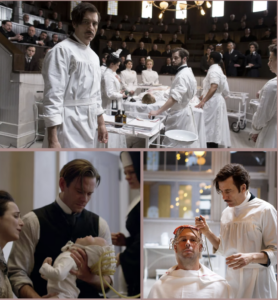
Few medical dramas have been as visually stunning, emotionally intense, or critically acclaimed as The Knick. Originally premiering in 2014, the Cinemax series ran for two remarkable seasons, earning widespread praise for its fearless storytelling, exceptional performances, and cinematic direction. More than a decade later, it continues to attract new audiences through HBO Max, where many viewers are discovering why it is still regarded as one of the finest medical dramas ever made.
Set in New York City at the turn of the 20th century, The Knick transports viewers to the Knickerbocker Hospital, a pioneering medical institution where modern surgery is still in its infancy. At a time when antibiotics do not yet exist and even routine operations carry enormous risks, doctors push the boundaries of science in their desperate efforts to save lives.
At the center of the series is Dr. John W. Thackery, played in a career-defining performance by Clive Owen.
Thackery is a brilliant surgeon whose revolutionary ideas continually transform medicine. However, behind his extraordinary talent lies a deeply troubled man battling addiction, personal demons, and the immense pressure of leading one of the country’s most innovative hospitals. Owen delivers a complex portrayal that balances genius, vulnerability, arrogance, and obsession, making Thackery one of television’s most unforgettable protagonists.
Joining him is André Holland as Dr. Algernon Edwards, an exceptionally gifted African American surgeon who arrives at the hospital despite facing relentless racism from both colleagues and patients. His struggle for professional recognition provides one of the series’ most powerful emotional storylines, highlighting the social inequalities of early 1900s America.
The supporting cast is equally impressive, featuring Jeremy Bobb, Juliet Rylance, Eve Hewson, Michael Angarano, Cara Seymour, Eric Johnson, Chris Sullivan, and Grainger Hines. Each character contributes to a richly layered portrait of a hospital where ambition, innovation, politics, and personal conflict constantly collide.
One of the series’ defining features is its remarkable authenticity.
The medical procedures are based on real surgical techniques used during the era, many of which appear shocking by today’s standards. The show vividly illustrates the dangers doctors faced while experimenting with groundbreaking treatments, often learning through painful trial and error.
Beyond its medical focus, The Knick explores issues that remain strikingly relevant today. Racism, gender inequality, addiction, poverty, corruption, and healthcare accessibility are woven naturally into the narrative, giving the series both historical depth and contemporary resonance.
Visually, the production is breathtaking.
Academy Award-winning director Steven Soderbergh directed every episode of the first two seasons, bringing a cinematic style rarely seen on television. His dynamic camerawork, moody lighting, and meticulous attention to period detail create an immersive atmosphere that perfectly captures the rapidly changing world of early 20th-century New York.
Adding to the unique experience is the haunting electronic score by Cliff Martinez. Rather than using traditional orchestral music, the modern soundtrack creates an unexpected yet highly effective contrast with the historical setting, enhancing the show’s emotional intensity.
Although The Knick concluded after two seasons, its reputation has only grown over time. Critics continue to praise its intelligent writing, fearless performances, and ambitious filmmaking, while audiences frequently recommend it as one of television’s greatest overlooked dramas.
For viewers who enjoy character-driven storytelling, historical dramas, or gripping medical series like House, The Good Doctor, or This Is Going to Hurt, The Knick offers something entirely unique. It is a compelling portrait of medical innovation, personal sacrifice, and the relentless pursuit of progress—one that remains every bit as captivating today as when it first premiered.