The Staircase: HBO Max’s Gripping Dramatization of a Real-Life Mystery
In the crowded landscape of true-crime dramas, HBO Max’s 2022 miniseries The Staircase stands out as a thoughtful and layered exploration of one of America’s most enduring legal enigmas. Created by Antonio Campos and spanning eight episodes, the series revisits the 2001 death of Kathleen Peterson, found at the bottom of a staircase in her Durham, North Carolina home, and the subsequent trial of her husband, novelist Michael Peterson, who was accused of her murder.
At its core, The Staircase is inspired by the acclaimed 2004 French documentary of the same name by Jean-Xavier de Lestrade, which followed Michael’s arrest, trial, and appeals with unprecedented access. The HBO adaptation takes a meta approach, not only dramatizing the events but also incorporating the making of the documentary itself into the narrative. This self-reflexive element adds depth, questioning how media shapes perception of truth and guilt.

Colin Firth delivers a tour-de-force performance as Michael Peterson, capturing the author’s charisma, defensiveness, and ambiguity. Firth portrays Michael as a complex figure: a war novelist with political ambitions, a devoted family man, yet one harboring secrets, including his bisexuality, which became a focal point in the trial. Toni Collette shines as Kathleen, a successful Nortel executive, bringing vitality and humanity to a character largely absent from the original documentary due to her death. Through flashbacks, Collette reveals Kathleen’s stresses—work pressures, financial worries—and the couple’s seemingly idyllic yet strained marriage.
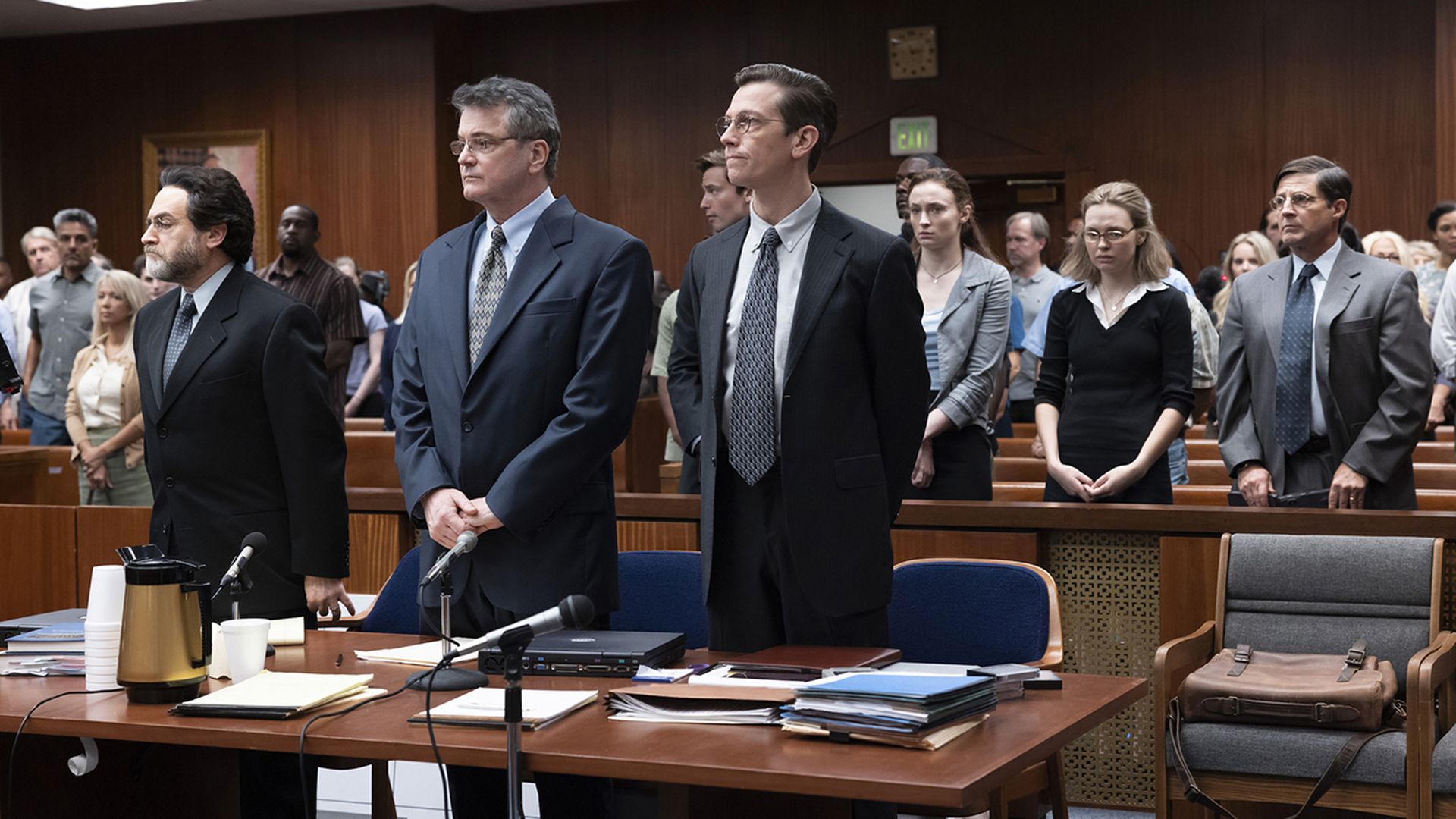
The supporting cast is equally stellar. Michael Stuhlbarg plays defense attorney David Rudolf with sharp intelligence, while Parker Posey embodies prosecutor Freda Black’s theatrical flair. The Peterson children—portrayed by Sophie Turner, Odessa Young, Dane DeHaan, Patrick Schwarzenegger, and Olivia DeJonge—navigate divided loyalties, highlighting the family’s fracture. Juliette Binoche appears as Sophie Brunet, the documentary editor who becomes romantically involved with Michael, blurring ethical lines.
What elevates The Staircase beyond mere reenactment is its refusal to provide easy answers. The real case remains unresolved: Michael maintained Kathleen fell accidentally after drinking wine and taking Valium, but prosecutors argued brutal beating, citing massive blood loss and lacerations. Intriguingly, the series explores the “owl theory”—a bizarre hypothesis that a barred owl attacked Kathleen outside, causing her to stumble indoors. Another shadow looms from 1985, when Elizabeth Ratliff, a friend whose daughters Michael adopted, died similarly at the bottom of stairs in Germany.
Campos, directing six episodes, employs a non-linear structure, jumping between timelines: the night of the death, the trial, and later developments like Michael’s 2017 Alford plea to manslaughter (allowing him to maintain innocence while acknowledging sufficient evidence). This mirrors the case’s twists—conviction in 2003, overturned in 2011 due to misleading forensic testimony, and eventual release.
Critically, the miniseries earned strong praise, holding a 92% approval rating on Rotten Tomatoes, with consensus highlighting Firth’s “terrific performance” and the show’s “fresh perspective” on the documentary. Reviewers lauded its psychological depth, calling it a “masterful true-crime epic” (Roger Ebert) and noting how it humanizes overlooked figures like Kathleen.
Yet, some critics found it paced slowly or overly familiar for documentary viewers. Nonetheless, The Staircase probes broader themes: the fallibility of justice, media’s role in trials, and the unknowability of private lives.
Premiering in May 2022, the series reignited interest in the case. Michael Peterson, now in his 80s, lives freely after his plea, having written books on his ordeal. The real story’s ambiguity endures, making this dramatization a compelling invitation to question what we think we know.
In an age of true-crime saturation, The Staircase reminds us why these stories captivate: not for resolution, but for the haunting gray areas they expose.